Can veneers correct an overbite?
If you are unhappy with both the position and appearance of your front teeth, you may wonder: can veneers correct an overbite? The most important distinction is between improving how the teeth look and actually correcting the way the upper and lower teeth meet.
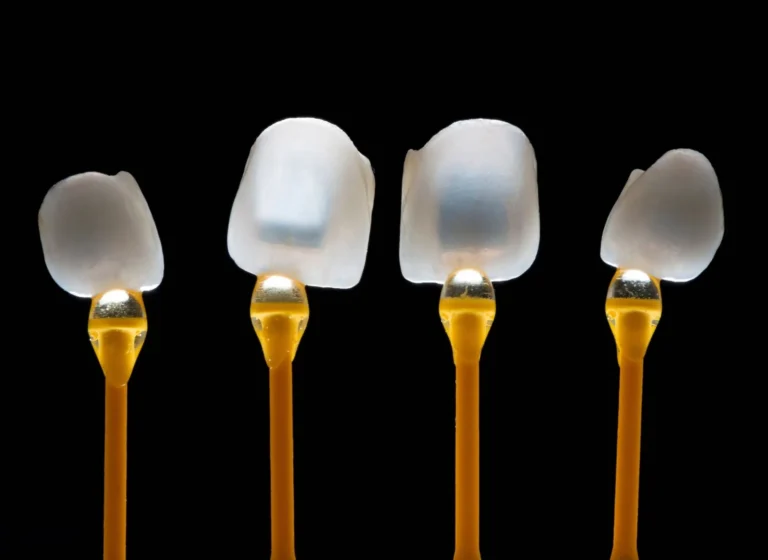
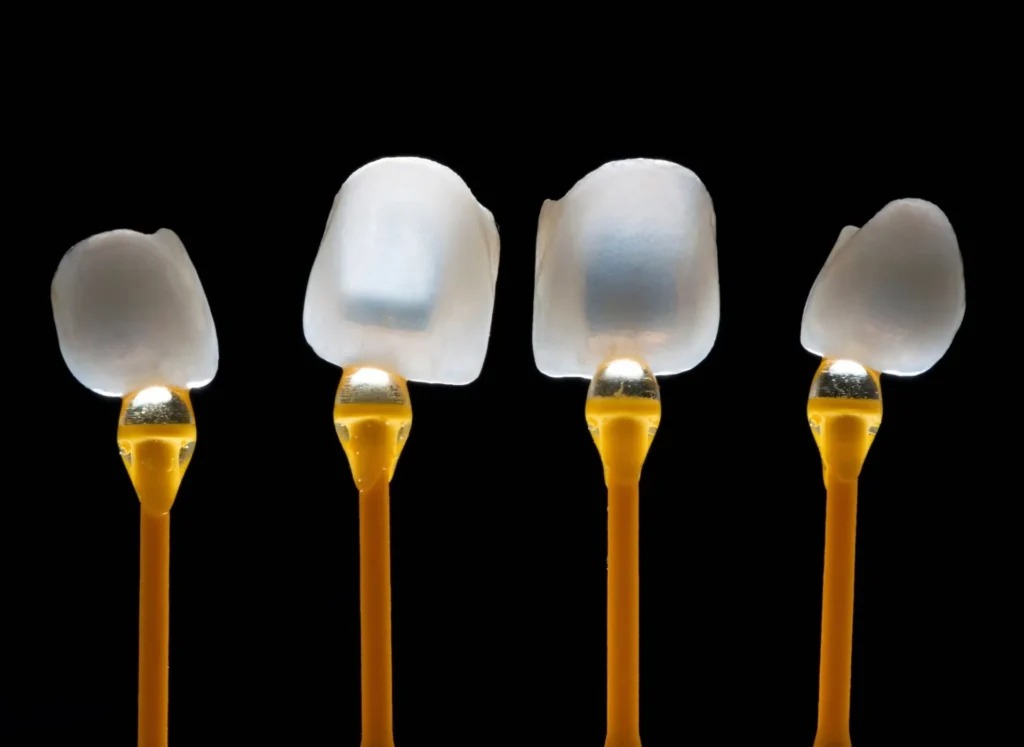
Dental veneers are thin restorations placed over the visible surfaces of teeth to modify characteristics such as shape, size, colour and proportions. They can therefore create significant aesthetic changes in appropriately selected cases. However, veneers do not move teeth or reposition the jaws, so they cannot correct an underlying malocclusion in the same way that orthodontic treatment can. The American Association of Orthodontists specifically states that veneers can improve the appearance of teeth but cannot correct misaligned teeth or jaws.
This distinction becomes particularly important with an overbite, also called a deep bite when the vertical overlap is excessive. Depending on its severity, an overbite may affect more than appearance and can contribute to tooth wear, gum trauma or functional problems.
That does not mean that veneers can never be part of treatment for someone who has an overbite. In selected cases they may be used after orthodontics to improve tooth shape, colour or proportions, or as part of carefully planned multidisciplinary treatment where only limited aesthetic compensation is required.
At Kings Medical Center in Dubai, both dental veneers and orthodontic treatments are available, allowing the team to assess the smile from both an aesthetic and functional perspective before recommending treatment.
Understanding the difference between changing the appearance of an overbite and correcting the bite itself is therefore the first step towards choosing an appropriate treatment.
What is an overbite and how is it different from overjet?
Before deciding whether veneers are suitable, it helps to understand exactly what an overbite is.
A certain amount of vertical overlap between the upper and lower front teeth is normal. An excessive overbite, often called a deep bite, occurs when the upper front teeth cover too much of the lower front teeth when the mouth is closed. This is different from overjet, which refers to the horizontal distance between the upper and lower front teeth. In other words, an overbite describes how far the upper teeth overlap downward, while overjet describes how far they project forward.
This difference matters because patients frequently use the word “overbite” to describe several different dental situations.
For example, you might feel that your upper front teeth look prominent when you smile. That appearance could be caused by excessive overjet, a deep vertical bite, the angle of the front teeth, differences in tooth size or a combination of these factors.
The underlying cause can also differ between patients. In some cases, the problem is primarily related to tooth position. In others, the relationship between the upper and lower jaws plays an important role. A deep bite can also be associated with tooth wear, loss of posterior tooth structure or other features of the bite.
This is why photographs alone are not enough to decide whether veneers can solve the problem.
A dentist or orthodontist needs to evaluate how the teeth meet, how much vertical and horizontal overlap exists, the position of the teeth and jaws, the health of the gums and the amount of available enamel.
Once the nature of the bite has been established, it becomes much easier to determine whether the priority should be orthodontic correction, restorative treatment or a combination of both.
Can veneers correct an overbite or only make it look different?
The simplest answer is that veneers cannot truly correct an overbite because they do not move the teeth or jaws.
Orthodontic correction changes the position of teeth and, where appropriate, the relationship of the bite. Veneers work differently. They are restorations attached to the front surfaces of teeth and are primarily used to alter their visible appearance. The American Association of Orthodontists clearly distinguishes these roles, noting that veneers can cover aesthetic imperfections but do not correct malocclusions.
However, there is an important nuance.
In certain carefully selected restorative cases, changing tooth shape can camouflage a small visual discrepancy or improve the appearance of mildly irregular anterior teeth. Published case reports have described restorative approaches for selected adult patients with particular incisor malocclusions when orthodontic treatment was not pursued. These reports show what may be technically possible in specific situations, but they do not mean that veneers are a general substitute for orthodontics.
Imagine, for example, that a patient’s upper front teeth are slightly uneven in shape and the bite itself is clinically acceptable. Veneers may be able to improve the apparent proportions and alignment of those teeth.
That is very different from a patient whose upper teeth significantly overlap the lower teeth and create excessive contact. Covering the teeth with veneers would not remove the underlying bite relationship.
In fact, if restorations are added without considering that relationship, the forces placed on them during biting and chewing may be unfavourable.
The key distinction is therefore:
Veneers can alter tooth appearance.
Orthodontics can alter tooth position.
Jaw surgery may be considered in selected severe skeletal cases.
For some patients, the most appropriate treatment combines more than one of these approaches.
Why can a deep overbite make veneers more complicated?
A deep overbite deserves particular attention before veneers are placed because the way the upper and lower teeth contact one another can directly affect the restorations.
The American Dental Association’s patient guidance states that people who clench or grind their teeth, or who have a deep overbite, may not be good candidates for veneers. Veneers can chip, crack, wear or loosen over time, and excessive or unfavourable bite forces may increase the challenges associated with treatment.
In a deep bite, the lower front teeth may contact the backs of the upper front teeth strongly or in a restricted space. In more pronounced cases, excessive overlap may contribute to wear of the front teeth or even trauma to the soft tissues. Restorative literature also describes lack of interocclusal space and tooth wear as important challenges when managing deep overbites.
This matters because a veneer needs sufficient room to function without repeatedly receiving excessive contact from the opposing teeth.
Consider a simple example. If a veneer is placed to lengthen or change the contour of an upper front tooth, but the lower tooth already contacts that area strongly every time the patient closes their mouth, the restoration may be exposed to forces that were not properly addressed.
This does not automatically mean that everyone with an overbite is unsuitable for veneers.
It means that the bite must be evaluated first.
In some cases, only a minor adjustment in the restorative design may be necessary. In others, orthodontic treatment may be recommended before veneers to create better tooth positions and more favourable space for conservative restorations.
Published interdisciplinary cases support this sequence: orthodontic treatment can first establish appropriate tooth position and overbite relationships, after which veneers can be used to complete the aesthetic result.
When can veneers be used in a patient with an overbite?
Having an overbite does not automatically rule out veneers. What matters is how severe the bite discrepancy is, where the teeth contact and what the patient actually wants to improve.
There are situations in which the overbite may be mild enough that it does not create a significant functional problem or interfere with the proposed restorations. If the main concerns involve colour, worn edges, small differences in shape or proportions, veneers may still be considered after a complete assessment.
Veneers may also be useful after orthodontic treatment.
Orthodontics can place the teeth in more appropriate positions and establish a more favourable bite, while veneers can then address aesthetic features that tooth movement cannot change, such as intrinsic discolouration, differences in tooth dimensions or damaged tooth surfaces.
This combined approach is well documented in restorative and orthodontic literature. Published cases describe orthodontics being used first to improve tooth position and bite relationships before veneers are placed to complete the aesthetic rehabilitation.
This can sometimes allow the restorative phase to be more conservative because the dentist does not need to compensate as extensively for badly positioned teeth.
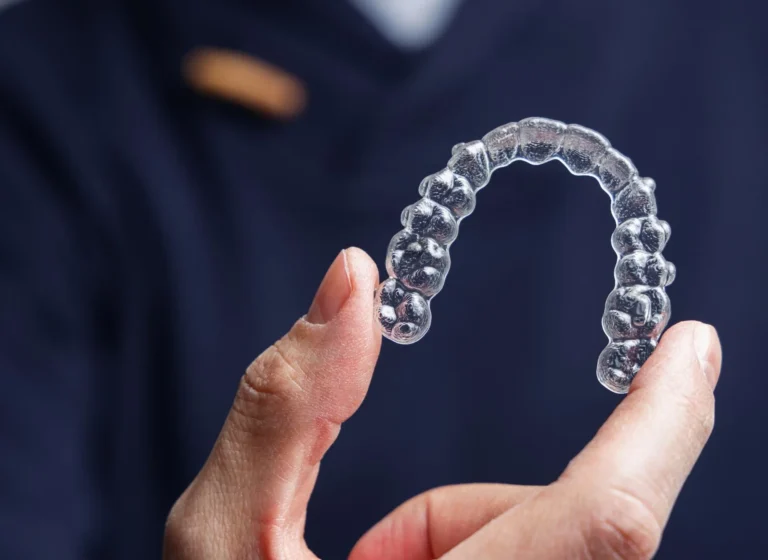
At Kings Medical Center, dental veneer treatment includes options such as porcelain veneers, resin veneers, composite bonding and minimal-preparation approaches, while orthodontic services include fixed appliances and clear aligner treatment. The practice also uses an intraoral scanner and Digital Smile Design technology as part of its digital workflow.
The correct sequence depends on the case.
Some patients may require orthodontics only.
Some may be appropriate for veneers without orthodontics.
Others may benefit most from orthodontics followed by restorative treatment.
This is why deciding on veneers simply because they appear to offer a faster visual transformation is not advisable. Treatment should preserve healthy tooth structure while also respecting the way the teeth function together.
Can veneers make an overbite appear smaller?
In selected cases, veneers may change the visual impression created by the front teeth, but this should not be confused with reducing the actual overbite.
For example, modifying the shape, width, length or visible inclination of certain teeth can sometimes make the smile appear more balanced. Restorative treatment has historically been used in selected adult patients to camouflage limited anterior tooth-position discrepancies, especially when tooth proportions also require correction.
However, there are biological limits to what should be attempted with veneers.
If a tooth is significantly positioned outside the ideal arch, making it appear straight through restorative treatment may require removing more tooth structure than would otherwise be necessary. The more restorative dentistry attempts to compensate for substantial malposition, the more important it becomes to consider whether orthodontic movement would provide a more conservative foundation.
Enamel preservation is particularly relevant with veneers. Research on conservative veneer preparation emphasises the importance of preserving enamel because adhesive bonding to enamel is generally more predictable than bonding when preparation extends unnecessarily into dentine. Diagnostic wax-ups and mock-ups can help the dentist assess how much tooth modification would be required before treatment begins.
This is why a patient should be cautious about descriptions such as “instant orthodontics” when referring to veneers.
A veneer can change the surface of the tooth.
It cannot relocate the root or change the skeletal relationship between the jaws.
If the problem is mainly aesthetic and mild, restorative camouflage may sometimes be considered. If the discrepancy is primarily orthodontic, moving the teeth first may allow a more conservative and functionally appropriate result.
The goal should never be simply to make the teeth look straight from the front while ignoring how they meet when the patient bites.
What treatments actually correct an overbite?
When an overbite needs genuine correction, orthodontic treatment is generally the principal approach because orthodontics can change tooth position and bite depth.
The American Association of Orthodontists identifies braces and clear aligners among the treatments that may be used for deep bites, depending on the severity, the patient’s age and the underlying cause. In more severe cases involving significant jaw discrepancies, surgical orthodontic treatment may sometimes be considered.
The exact mechanics differ from case to case.
An orthodontist may need to move the front teeth, change the position of posterior teeth or use a combination of movements to create a healthier vertical relationship. Treatment planning depends on factors such as facial structure, tooth display, bite depth, available space and whether the problem is primarily dental or skeletal.
This is why two patients who both say they have an overbite may receive very different recommendations.
One person may have a relatively mild dental deep bite that can be addressed through orthodontic tooth movement.
Another may have substantial jaw involvement and require a more complex assessment.
A third patient may have worn teeth that have altered the bite over time, meaning restorative considerations also become important.
For patients who want veneers as well as bite correction, orthodontics can sometimes be performed before the restorative phase. Once tooth positions have improved, the dentist can reassess whether veneers are still needed and, if so, how conservatively they can be prepared.
Kings Medical Center has orthodontists within its multidisciplinary dental team and provides both fixed orthodontic treatment and clear aligner therapy.
The important point is not to choose treatment according to which procedure seems quickest. The starting diagnosis should determine whether the problem requires tooth movement, restorative treatment or both.
Can you get veneers instead of orthodontic treatment?
Some adults investigate veneers specifically because they would prefer not to undergo orthodontic treatment. The possibility depends entirely on the nature of the problem.
If the concern is mainly related to tooth colour, shape, size or small aesthetic discrepancies, veneers may sometimes provide the change the patient wants without orthodontics.
If the concern is a genuine malocclusion, however, veneers do not offer the same treatment.
They can camouflage selected visible irregularities but cannot move the roots of the teeth or change the relationship between the jaws. The AAO therefore states directly that veneers cannot correct malocclusions, although they may be easier to place after orthodontic treatment has correctly positioned the teeth.
There are case reports in the dental literature in which veneers or other restorative approaches have been used for selected patients with anterior malalignment who declined orthodontic care. These reports demonstrate that alternatives can sometimes be considered, but case reports represent carefully selected clinical situations and should not be interpreted as evidence that veneers can replace orthodontics for every overbite.
Patients should also understand that veneers normally involve a long-term restorative commitment.
The ADA explains that veneer treatment may require removal of enamel and can be irreversible. Veneers can also require repair or replacement if they chip, wear, loosen or become damaged.
This makes the decision particularly important when otherwise healthy teeth are involved.
If orthodontics could place a healthy tooth into a better position without covering it, that option should at least be considered before tooth preparation is undertaken.
The objective of the consultation is therefore not to persuade every patient towards orthodontics or veneers. It is to explain the biological and functional consequences of each approach so that treatment is based on informed choices.
Why might orthodontics be recommended before veneers?
Orthodontics before veneers may initially sound like a longer route, but in some cases it can create a better foundation for conservative restorative treatment.
Suppose the front teeth are crowded, excessively tilted or positioned in a deep bite. Attempting to create the desired appearance with veneers alone may require the dentist to compensate for those positions by adding material in some areas and removing tooth structure in others.
If orthodontic treatment first moves the teeth into more suitable positions, the restorative dentist may have a more favourable starting point.
Published literature describes this interdisciplinary approach. Orthodontic treatment has been used to improve tooth positions, overbite, spacing and anterior guidance before ceramic veneers are placed. In these cases, orthodontics and restorative dentistry perform different roles rather than competing with one another.
Another benefit is that the treatment plan can sometimes change after orthodontics.
A patient who initially thought they needed veneers on many teeth may find that once the teeth are aligned, fewer restorations are required. In some situations, aesthetic concerns may be addressed with more conservative procedures instead.
This is particularly relevant when minimal-preparation dentistry is a priority.
Whenever possible, preserving healthy enamel is valuable for veneer bonding and long-term restorative planning. Conservative veneer literature emphasises diagnostic wax-ups, mock-ups and reduction guides as tools for avoiding unnecessary tooth reduction.
At Kings Medical Center, the availability of orthodontic, cosmetic and restorative dentistry within the same clinical environment can support this type of multidisciplinary planning. The practice’s analysis identifies a multidisciplinary approach and international clinical team among its central characteristics.
For the patient, the important question becomes not “Which treatment is quicker?” but “Which sequence best protects my teeth while addressing both appearance and function?”
What happens if veneers are placed without checking the bite?
Placing veneers without first understanding the patient’s bite can create avoidable problems.
Every time you close your mouth, bite into food or move your jaw, the front teeth may come into contact in particular ways. When veneers are added, their shape must therefore be designed not only to look appropriate but also to function within those movements.
This becomes especially important in patients with a deep overbite, clenching, grinding or substantial tooth wear.
The ADA advises that patients with a deep overbite or grinding habits may not be suitable candidates for veneers and notes that veneers can chip, crack, wear or loosen over time.
Deep bites themselves may also be associated with excessive front-tooth wear, soft-tissue trauma and limited space for restorative materials. The restorative management of these cases can therefore require careful assessment of occlusion and sometimes multidisciplinary treatment involving orthodontics, restorative dentistry or, in selected severe situations, orthognathic care.
This is why planning veneers from photographs or choosing a tooth shape solely because it looks attractive on another person is inappropriate.
Before treatment, the dentist may need to evaluate:
- how the upper and lower teeth contact;
- whether there is sufficient space for the restorations;
- tooth wear or fractures;
- clenching or grinding habits;
- gum health;
- enamel available for bonding;
- tooth position and inclination;
- the severity of the overbite;
- whether orthodontic treatment should come first.
Digital planning can help visualise the aesthetic objective, but technology does not replace the clinical examination.
At Kings Medical Center, Digital Smile Design and intraoral scanning are among the technologies available for planning dental treatment. Used appropriately, these tools can help patients understand a proposed aesthetic result while the dentist also evaluates whether that result is compatible with the bite.
Can minimal-prep veneers be used if you have an overbite?
Minimal-preparation veneers are designed with the intention of preserving as much natural tooth structure as reasonably possible. However, the term does not mean that every patient can receive veneers without preparation, and having an overbite can make careful case selection even more important.
The amount of preparation needed depends on factors such as existing tooth position, colour, shape, available enamel and the final restorative design.
If a tooth already projects significantly forward, adding a veneer without sufficient planning could make it appear even more prominent. Conversely, attempting to reduce that prominence restoratively could require more tooth preparation, which may undermine the objective of a minimal-preparation approach.
Research into conservative ceramic veneers emphasises the importance of preserving enamel and using diagnostic wax-ups and mock-ups to guide tooth reduction. These planning steps help determine whether the intended result can be achieved without unnecessary removal of healthy structure.
The bite must also provide suitable space for the restoration.
If the lower teeth contact heavily against the backs or edges of the upper teeth because of a deep bite, the dentist may conclude that orthodontic correction is preferable before placing veneers.
In other patients with a mild and stable bite, conservative veneers may still be possible.
Kings Medical Center includes minimal-preparation veneers among its cosmetic dentistry services and uses digital smile planning and intraoral scanning as part of its available technology.
The important word is “minimal”, not “none”.
A conservative treatment plan should be based on what is biologically appropriate for the individual tooth. Patients should therefore avoid DIY veneer products, filing their own teeth or using unregulated materials purchased online in an attempt to change their bite or smile.
An overbite requires a clinical diagnosis. No at-home cosmetic product can safely move teeth or evaluate the forces acting on them.
How does a dentist decide whether you need veneers, orthodontics or both?
The decision begins with a complete examination rather than with the veneer itself.
A patient may arrive saying, “I want veneers because I have an overbite,” but the consultation needs to establish what is actually creating the concern.
The dentist and, where appropriate, orthodontist may assess the amount of overbite and overjet, tooth positions, jaw relationship, gum health, tooth wear, enamel condition, smile proportions and the way the upper and lower teeth contact.
Radiographs, photographs, digital scans or other records may also be used when clinically indicated.
The treatment possibilities can then be discussed.
If the teeth are healthy but significantly malpositioned, orthodontics may be the more appropriate starting point because it addresses tooth position directly. AAO guidance identifies orthodontic treatment as the approach used to correct deep bites, with braces, clear aligners and, for selected severe skeletal cases, surgical orthodontics among the potential options.
If the bite is acceptable and the main problem relates to colour or tooth proportions, veneers may be considered.
If both problems exist, a combined plan may be recommended.
For example, orthodontics might first improve the bite and tooth alignment. The teeth can then be reassessed to determine whether veneers are still necessary for colour, shape or damaged surfaces.
This approach is consistent with published interdisciplinary cases in which orthodontic correction created appropriate tooth positions before restorative treatment completed the aesthetic result.
At Kings Medical Center in Dubai, the team includes dentists working in cosmetic dentistry and orthodontists, supporting a multidisciplinary approach when a case involves both aesthetics and bite correction.
The final recommendation should therefore be personalised rather than based on a standard smile design.
Conclusion: can veneers correct an overbite?
So, can veneers correct an overbite? In the strict clinical sense, veneers do not correct the underlying overbite because they cannot move teeth or change the position of the jaws. Their role is restorative and aesthetic: they can change characteristics such as tooth shape, size, colour and visible proportions. The American Association of Orthodontists specifically states that veneers cannot correct malocclusions.
In carefully selected cases, veneers may make a mild irregularity appear less noticeable, particularly when the principal concern is cosmetic rather than functional. However, camouflage and correction are not the same thing.
A significant deep overbite requires particular caution because the opposing teeth may place unfavourable forces on veneers. The ADA notes that patients with a deep overbite may not be suitable candidates for veneers, while orthodontic guidance identifies excessive overbite as a condition that can contribute to tooth wear, gum damage and functional concerns.
For many patients who want both bite correction and an aesthetic change, orthodontics followed by veneers may provide a more appropriate sequence. Moving the teeth first can establish better positions and potentially allow the subsequent restorative treatment to remain more conservative. Published multidisciplinary cases demonstrate how orthodontics and veneers can be used together when both functional and aesthetic objectives need to be addressed.
The correct approach depends on your anatomy, severity of the overbite, condition of the teeth and expectations.
Avoid attempting to change an overbite with DIY veneers, filing teeth at home or using products purchased online. Bite correction requires professional diagnosis, and permanent changes to healthy teeth should only be considered after understanding the available alternatives.
If you are considering veneers but are concerned about an overbite, contact Kings Medical Center to arrange an individual assessment. The dental team can evaluate your bite, tooth position and smile and explain whether veneers, orthodontic treatment or a combined approach may be appropriate for your particular case.
Kings Medical Center in Dubai Deira
Address: Al Rigga Business Center
Visit our Dental Area or Skin Area.