Find out how many microneedling sessions do you need
If you are considering microneedling, one of the first questions you may ask is how many microneedling sessions do you need before you can expect to see a difference in your skin. The answer depends mainly on what you would like to treat, the condition of your skin, the type and depth of microneedling performed and how your skin responds between appointments.
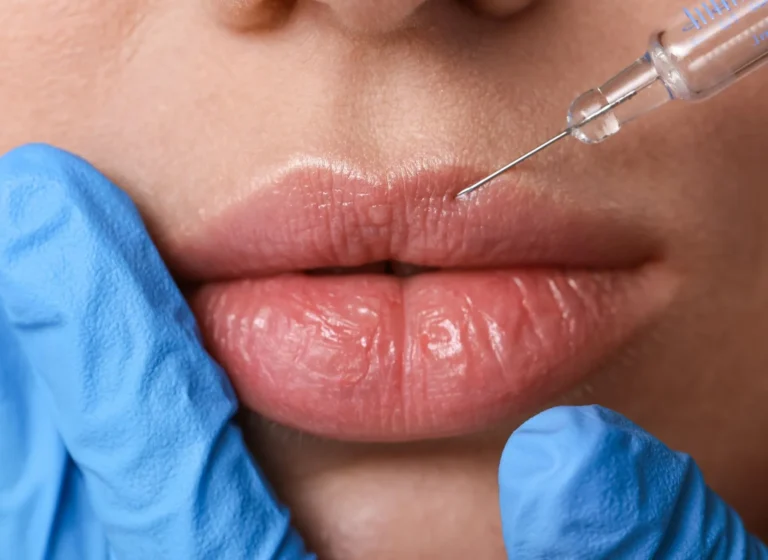
Microneedling works by creating controlled microscopic punctures in the skin. This controlled process is intended to stimulate the skin’s natural repair response. Because this response develops gradually, microneedling is generally approached as a course of treatment rather than an instant procedure. The FDA also advises patients that more than one procedure may be required to obtain the desired aesthetic improvement.
Clinical studies commonly assess treatment courses involving around three or four sessions, although this does not mean that every patient should automatically receive the same number. For example, research on acne scars has evaluated three monthly treatments, while studies investigating facial lines and skin texture have used four monthly sessions.
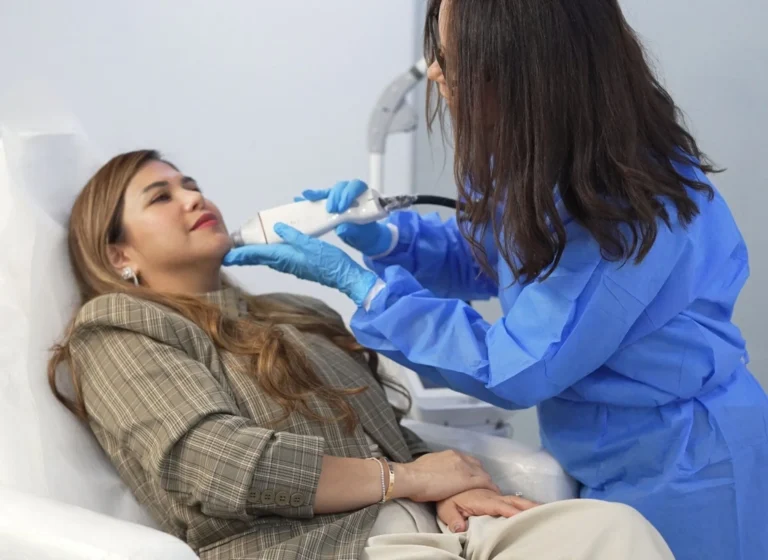
At Kings Medical Center in Dubai, microneedling is part of the aesthetic treatments available for concerns such as skin texture and acne scarring, with both conventional and radiofrequency approaches considered according to the individual case.
Rather than deciding in advance that everyone requires an identical course, the skin should first be assessed. In this guide, we explain how many sessions may be considered for different concerns, why appointments are spaced apart and when additional or maintenance treatments might be appropriate.
How many microneedling sessions do you usually need?
There is no universal number of microneedling sessions that is suitable for every patient. However, a course of approximately three to four treatments is commonly used in clinical studies, particularly when microneedling is performed to improve skin texture, fine lines or acne scars.
That number should be viewed as a useful reference rather than a prescription.
A patient with relatively mild textural irregularities may respond differently from someone with deeper atrophic acne scars. Similarly, a younger patient seeking an improvement in general skin texture has a different starting point from someone whose main concern is more established facial lines.
A treatment plan may therefore begin with a limited series of sessions, followed by reassessment. The clinician can then determine whether sufficient improvement has been achieved or whether further treatment may be appropriate.
The number of treatments can depend on factors such as:
- the reason for having microneedling;
- the severity and depth of the concern;
- whether conventional or radiofrequency microneedling is being considered;
- the area being treated;
- the patient’s skin type and medical history;
- how the skin responds after each procedure;
- the intensity and depth used during treatment;
- the patient’s expectations.
This is also why asking simply “How many sessions does microneedling take?” does not always provide the most useful answer. The more important question is how many sessions your particular skin may need to reach a realistic improvement.
At Kings Medical Center, the treatment plan can therefore be adjusted as the course progresses rather than assuming before the first appointment that a specific number of sessions will be necessary.
How many microneedling sessions do you need for acne scars?
Acne scars are one of the most common reasons patients consider microneedling, but not all acne scars are alike. Some are shallow, while others are deeper or tethered to the underlying tissue. Patients may also have several scar types at the same time.
This means that the answer to how many microneedling sessions do you need for acne scars depends heavily on scar severity and morphology.
Clinical trials provide useful examples. One randomised study of patients with atrophic facial acne scars used three microneedling sessions performed monthly, with patients assessed again after treatment. Another study investigated four sessions at approximately three-week intervals.
These studies demonstrate an important principle: acne-scar treatment is usually progressive. One treatment may begin the process, but deeper structural changes generally require time and repeated controlled stimulation.
Patients with mild superficial scars may require fewer procedures than those with more extensive or deeper scarring. Certain scar types may also respond less predictably to microneedling alone and could require a different or combined treatment approach.
Before treatment, it is therefore important to establish what type of scarring is present. What patients sometimes describe as “acne scars” may include a mixture of:
- depressed or atrophic scars;
- uneven skin texture;
- enlarged-looking pores;
- post-inflammatory pigmentation;
- persistent redness.
These problems are not identical and do not necessarily respond to the same procedure.
Active inflammatory acne should also be assessed before microneedling is performed. Treating irritated or infected skin without appropriate medical evaluation is not advisable.
At Kings Medical Center, microneedling is among the treatments considered for acne scars and skin texture. The number of sessions should be determined after examining the scars rather than simply following a standard package of treatments.
How many microneedling sessions may be needed for fine lines and skin texture?
When the objective is general skin rejuvenation rather than acne-scar correction, the treatment plan may be different. Patients often ask about microneedling because they would like their skin to appear smoother or because they have noticed fine lines and changes in texture.
Several clinical studies investigating these concerns have used four treatments spaced approximately one month apart.
In one trial involving adults with facial and neck fine lines and wrinkles, participants underwent four monthly microneedling treatments, with further assessments continuing after the final session. Researchers observed measurable changes in skin density and elasticity during follow-up.
Another clinical study examining signs of ageing used four treatments spaced four weeks apart and reported improvement in measures including wrinkles, skin texture and laxity during subsequent follow-up.
This does not mean that four sessions are compulsory for every person. Rather, it shows why microneedling is commonly planned as a sequence rather than as a single isolated appointment.
A patient with mild textural changes may be satisfied earlier. Someone with more established concerns may need additional treatment or may be better suited to another approach.
It is equally important to define what “better skin” actually means to the individual patient. Microneedling should not be expected to completely remove every wrinkle, pore or irregularity.
During an assessment, the clinician can identify the most relevant concerns and explain what level of improvement may be realistic. Progress can then be reviewed after several sessions instead of repeatedly treating the skin without evaluating whether the approach remains appropriate.
How long should you wait between microneedling sessions?
Microneedling sessions are normally spaced apart rather than performed in rapid succession. This is because the treatment deliberately creates controlled micro-injuries in the skin, after which the tissue requires time to recover and begin its repair process.
The exact interval varies according to the technique, treatment intensity, device and individual patient.
Many conventional microneedling studies have used intervals of around three to four weeks. For example, acne-scar trials have examined three monthly sessions or four treatments separated by approximately three weeks, while studies on facial rejuvenation have frequently used four-week intervals.
Radiofrequency microneedling protocols can also vary. Published trials have used intervals ranging from approximately four to eight weeks depending on the treatment parameters and research protocol.
This variation is one reason patients should not create their own schedule based on something they have seen online.
Performing another procedure before the skin has adequately recovered is not a way to speed up the result. The skin’s biological response continues between appointments, and improvement may develop during the weeks after each treatment.
The appropriate interval may also change if the patient experiences more prolonged redness, irritation or another reaction.
If the skin has not returned to its expected condition, the next session may need to be postponed and the area reassessed.
More treatment is not automatically better treatment. The goal should be to create a controlled stimulus and then allow sufficient recovery before deciding what the skin needs next.
When will you see results from microneedling?
Another reason the number of sessions can be confusing is that microneedling results are not necessarily immediate.
Shortly after treatment, the skin may look red or feel tight and sensitive. The FDA lists temporary reactions such as redness, dryness, roughness, itching, peeling, discomfort and bruising among recognised risks associated with microneedling devices. These effects generally occur around the treatment period and often resolve during recovery.
What you see during the first few days therefore should not be used to judge the final result.
Microneedling relies on a repair and remodelling response that develops over time. This means that a patient may begin to notice changes between sessions, while further improvement can continue after the treatment course has finished.
Clinical studies often evaluate patients weeks or even months after the final procedure for precisely this reason. For example, studies examining facial wrinkles have assessed results one to three months after a four-session course, while acne-scar trials have also followed patients for months after their final treatment.
This has an important practical consequence: having another treatment simply because you cannot see a dramatic change after several days is usually not an appropriate way to judge progress.
Before-and-after photographs taken under consistent conditions can help evaluate gradual improvements more accurately.
Patients should also maintain realistic expectations. Microneedling may improve the appearance of certain concerns but cannot guarantee flawless skin or complete scar removal.
A review after an initial treatment course allows the clinician to assess what has changed and decide whether further sessions are justified.
Can one microneedling session be enough?
A single microneedling session may produce a noticeable change for some patients, particularly when the concern is mild, but one treatment should not automatically be expected to provide the full result.
The FDA specifically advises patients that more than one microneedling procedure may be needed to obtain the desired aesthetic improvement.
This is consistent with the way microneedling has been investigated clinically. Many studies evaluating acne scars, facial wrinkles and skin texture use a series of three or four treatments rather than a single procedure.
Why?
Because microneedling does not work in the same way as applying make-up or undergoing a procedure that immediately changes the shape of a facial feature. Its purpose is to trigger a biological repair response in the skin.
That response takes time.
A first session may begin the process and can also provide useful information about how your skin tolerates treatment. After the skin has recovered, the clinician can evaluate the response before performing the next procedure.
There are situations where one treatment may be all that a patient wishes to have. However, if the objective is to address established acne scars or more noticeable changes in skin texture, it is reasonable to expect that a treatment course may be discussed.
Patients should be cautious of promises that one microneedling procedure will completely erase scars, wrinkles or other skin concerns.
A more responsible approach is to evaluate the starting condition, explain what the treatment can realistically achieve and then reassess progress after each stage.
Do you need the same number of sessions with RF microneedling?
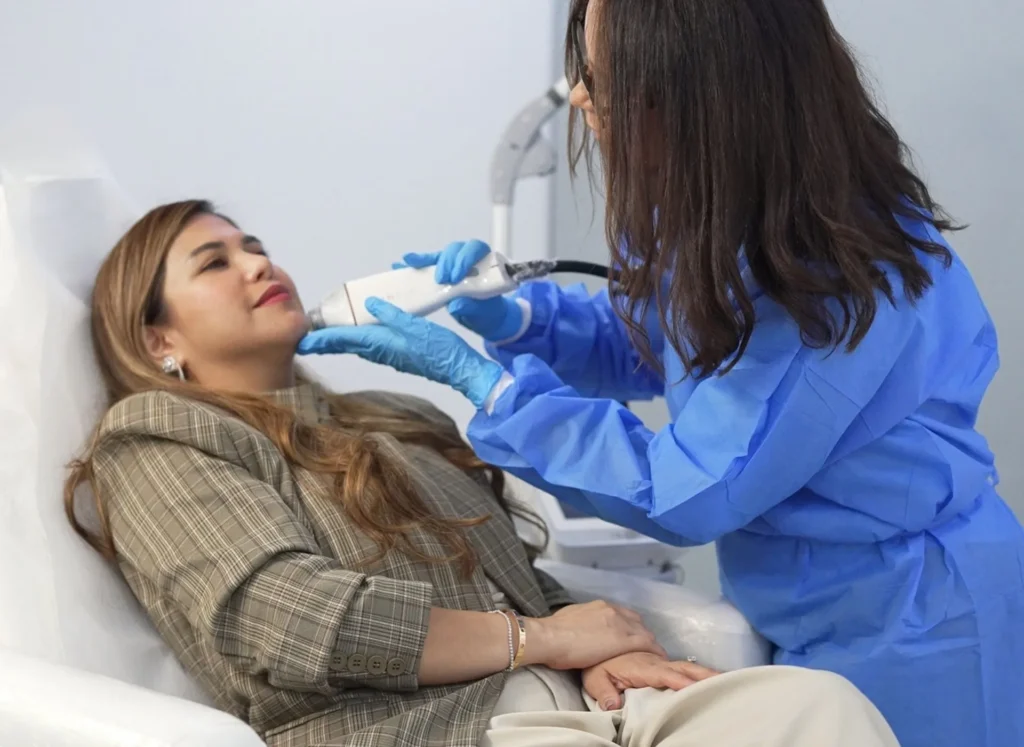
Radiofrequency microneedling, or RF microneedling, combines microneedles with radiofrequency energy delivered into the tissue. It therefore differs from conventional microneedling, which creates controlled punctures without delivering the same type of thermal energy.
Because the mechanisms and treatment settings differ, patients should not assume that conventional and RF microneedling require an identical number of sessions.
Clinical research has examined a variety of RF microneedling schedules. Studies of acne scars have used three sessions at four-week intervals, four consecutive treatments approximately four weeks apart, and more recently three sessions performed at eight-week intervals.
Research on facial ageing has also evaluated courses of three monthly RF microneedling treatments.
These different protocols illustrate why the treatment needs to be planned according to the device parameters, indication and patient rather than according to a universal timetable.
Kings Medical Center includes RF microneedling among its aesthetic skin treatments, allowing the type of procedure to be considered according to the patient’s concern and clinical assessment.
RF microneedling also requires particular attention to safety. In October 2025, the FDA issued a safety communication after receiving reports of serious complications associated with certain uses of RF microneedling, including burns, scarring, fat loss and nerve damage. It advises patients to seek treatment from licensed healthcare professionals with appropriate training and experience.
For this reason, RF microneedling should not be regarded simply as a stronger version of a beauty treatment, nor should it be performed at home.
Why do some people need more microneedling sessions than others?
Two people can undergo microneedling for what appears to be the same problem and still require different treatment plans.
The first important difference is the starting condition of the skin.
A patient with a small number of shallow acne scars may respond differently from someone with widespread, deeper scars. A person seeking mild improvement in skin texture also has different requirements from someone with more established wrinkles.
Age, skin characteristics and healing response can influence treatment planning as well.
The type of concern matters too. Microneedling devices have been authorised by the FDA for specific indications including the improvement of facial acne scars, facial wrinkles and certain abdominal scars, but this does not mean every skin concern is automatically appropriate for microneedling.
Before treatment, a healthcare professional should therefore consider:
- what the patient would like to improve;
- the severity of the concern;
- the patient’s skin type;
- medical conditions and medications;
- previous dermatological or aesthetic treatments;
- history of abnormal scarring;
- active skin conditions or infections;
- the response to previous microneedling sessions.
The treatment settings themselves also influence the course. Needle depth, device type and, where relevant, energy settings should be selected according to the area and objective.
This is why copying someone else’s treatment schedule from social media is not useful.
Their skin is not your skin, and their medical history, treatment intensity and desired result may be completely different.
The number of sessions should remain flexible enough to be adjusted according to how the skin actually responds.
Can you have too many microneedling sessions?
Yes. The fact that microneedling may require multiple sessions does not mean that performing more procedures, or performing them more frequently, will necessarily create a better result.
Microneedling deliberately penetrates the skin, and medical microneedling devices can reach living tissue containing blood vessels and nerves. This is why the FDA recommends choosing a healthcare provider who is appropriately trained to perform the procedure.
Possible reactions include redness, tenderness, peeling, itching, bruising and temporary discomfort. Less common complications can include changes in pigmentation, infection and reactivation of cold sores.
Patients with certain medical or skin conditions may also not be suitable candidates, or may need additional assessment before treatment.
Another important concern is hygiene. Needle cartridges intended for a single treatment should not be reused. Reusing cartridges can create a risk of transmitting infectious agents.
For these reasons, DIY medical microneedling is not recommended.
Patients sometimes purchase aggressive rollers or devices online because they believe that using longer needles at home will reproduce a professional procedure. Penetrating more deeply does not simply make a treatment more effective; it also increases the importance of anatomy, sterile technique, correct settings and appropriate aftercare.
RF microneedling carries additional considerations because radiofrequency energy is delivered beneath the skin. The FDA specifically states that RF microneedling is a medical procedure and should not be performed at home.
The safest treatment course is therefore not the highest possible number of sessions, but the number that is clinically appropriate for the patient’s skin.
How do you know when you have had enough microneedling sessions?
The decision to continue microneedling should be based on progress rather than simply completing a predetermined number.
For example, a clinician may initially discuss three sessions and then review the skin. If there has been meaningful improvement and the patient is satisfied, there may be no reason to continue immediately.
If there has been some improvement but the concern remains significant, further treatment may be discussed.
If the skin has responded poorly or the expected improvement has not occurred, simply repeating the same procedure indefinitely may not be the right answer. The treatment plan may need to be reconsidered.
A useful review can include comparison of photographs, examination of the treated area and discussion of the patient’s own experience.
Questions worth considering include:
Has the original concern improved?
A reduction in scar visibility or improvement in texture may indicate that the treatment is working, even if the skin is not completely smooth.
Is the skin recovering normally between sessions?
Persistent irritation or unexpected reactions should be assessed before another procedure is performed.
Are expectations realistic?
Microneedling may improve a concern without completely removing it.
Would another treatment approach be more appropriate?
Certain scars or skin conditions may respond better to a different or combined strategy.
Patients should also remember that improvement may continue after the final session. Immediately scheduling additional procedures before allowing sufficient time for the skin to remodel can make it difficult to judge the true outcome.
At Kings Medical Center in Dubai, the aim of an individual assessment is to determine whether further treatment remains useful rather than continuing automatically.
Do you need maintenance microneedling after finishing your first sessions?
Once an initial microneedling course has been completed, patients often ask whether they need to continue treatment permanently.
There is no universal maintenance schedule.
The FDA notes that improvement after microneedling may be temporary and that additional procedures may sometimes be required over time to maintain an aesthetic result. However, this does not mean that every patient needs treatment every few months.
Maintenance depends on what was treated and how the skin changes afterwards.
For acne scars, the objective is generally different from ongoing treatment for age-related changes in skin quality. Once a scar has improved, the decision to perform further procedures should be based on whether additional improvement is realistic and worthwhile.
For skin ageing, the skin will continue to change naturally over time. A patient may therefore choose to have another assessment in the future if new concerns develop.
Good everyday skin care also remains important, but it should not be confused with trying to reproduce medical microneedling at home.
A suitable skin-care routine, appropriate sun protection and following the advice provided by the healthcare professional can support overall skin health. They do not replace clinical treatment when a medical microneedling procedure is indicated.
Rather than deciding in advance that you will need microneedling indefinitely, complete the recommended initial course, allow sufficient time for the result to develop and then reassess.
Maintenance should be individual, purposeful and based on the condition of the skin at that time.
Conclusion: how many microneedling sessions do you need?
So, how many microneedling sessions do you need? For many concerns, clinical studies have used treatment courses of around three to four sessions, often separated by approximately three to four weeks. However, some RF microneedling protocols use longer intervals, and the correct number and timing cannot be determined from a general rule alone.
A patient seeking improvement in mild skin texture does not necessarily need the same plan as someone with deeper acne scars. The type of microneedling, treatment intensity, skin characteristics, medical history and response to previous sessions all need to be considered.
Results also take time.
Microneedling works by stimulating a gradual skin-repair response, which means improvement can continue between treatments and after the final procedure. Having sessions too close together or repeatedly treating the skin before assessing the response is therefore not a way to accelerate the process.
The most appropriate approach is usually to begin with a treatment plan based on the initial assessment and then review progress before deciding whether further sessions are necessary.
It is equally important to avoid aggressive DIY microneedling or attempting to reproduce professional treatments using devices purchased online. Medical microneedling and especially RF microneedling require appropriate training, hygiene protocols and an understanding of possible complications.
If you are considering treatment for acne scars, skin texture, fine lines or another suitable concern, contact Kings Medical Center to arrange an individual assessment. The team can evaluate your skin, discuss your objectives and determine how many microneedling sessions may be appropriate for your particular case.
Kings Medical Center in Dubai Deira
Address: Al Rigga Business Center
Visit our Dental Area or Skin Area.