Which is better: a dental bridge or an implant?
When a tooth is lost, replacing it can help restore chewing, appearance and the continuity of the dental arch. One of the first decisions patients may face is which is better: a dental bridge or an implant?
There is no option that is automatically better for every patient. Both dental bridges and implant-supported restorations are established ways of replacing missing teeth, and studies have shown favourable outcomes for both when they are correctly selected and maintained. A systematic review comparing tooth-supported and implant-supported three-unit fixed dental prostheses found no statistically significant difference in the survival of either the supporting structures or the prostheses during the periods examined.
The two treatments, however, work very differently.
A traditional dental bridge uses neighbouring teeth to support a replacement tooth. A dental implant instead uses an artificial root placed in the jawbone, which then supports a crown or another prosthetic restoration. One important advantage of a single implant is that healthy neighbouring teeth generally do not need to be prepared simply to support the missing tooth replacement.
This does not automatically make an implant the correct choice. Bone availability, gum health, the condition of adjacent teeth, medical history, the position of the missing tooth and the patient’s treatment preferences all need to be considered.
At Kings Medical Center in Dubai, implantology and fixed prosthetic treatments are both available, supported by technologies including 3D cone-beam imaging and digital scanning.
Understanding the advantages and limitations of each option can help you have a more informed discussion with your dentist.
What is the difference between a dental bridge and a dental implant?
A dental bridge and a dental implant may ultimately achieve a similar visible objective — filling the space left by a missing tooth — but the way they achieve it is very different.
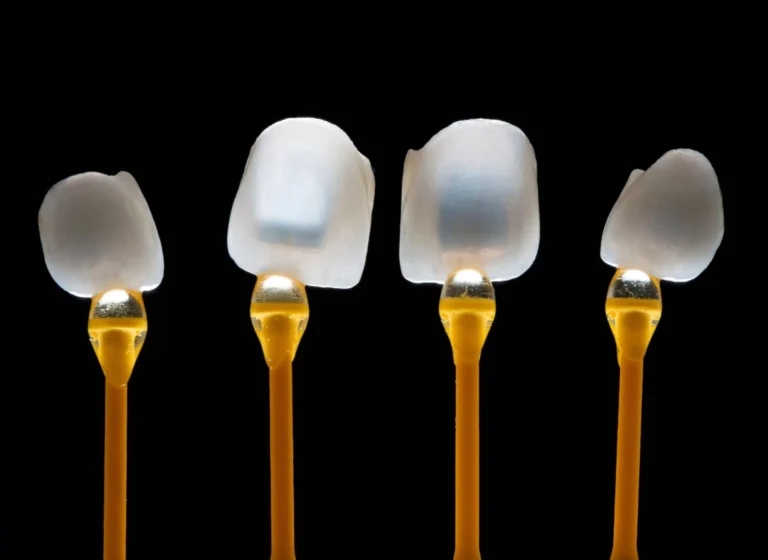
A conventional bridge usually consists of a replacement tooth connected to restorations placed on the teeth next to the gap. These neighbouring teeth act as abutments, supporting the artificial tooth between them. Because the supporting teeth normally need to be prepared to receive the restoration, their existing condition becomes an important part of treatment planning.
A dental implant takes another approach. An implant is surgically positioned in the jawbone at the site of the missing tooth. Once suitable stability and healing have been achieved, the implant can support a crown designed to replace the visible part of the tooth. Research comparing single-tooth replacement options highlights preservation of neighbouring tooth structure as an important advantage of implant treatment when those adjacent teeth are otherwise healthy.
This creates one of the central differences between the treatments:
- A conventional bridge relies on neighbouring teeth for support.
- An implant-supported crown is supported independently by the implant.
Neither approach should be chosen from photographs alone.
For a bridge, the dentist needs to determine whether the supporting teeth are healthy and strong enough to carry the restoration.
For an implant, the dentist needs to assess the available bone, surrounding tissues and anatomical structures, as well as general factors that could influence surgery and healing.
The location of the missing tooth is also important. Replacing a front tooth presents different aesthetic and functional challenges from replacing a molar that experiences substantial chewing forces.
The goal is therefore not simply to fill an empty space, but to replace the tooth in a way that works appropriately with the rest of the mouth.
Which is better when the teeth next to the gap are healthy?
When the teeth on either side of a missing tooth are healthy, minimally restored and structurally sound, a dental implant can have an important advantage: those teeth usually do not need to become supports for the replacement.
This consideration has been discussed in the dental literature for many years. A comparative review of single-tooth replacement concluded that while fixed bridges remain appropriate in certain cases, implant-supported restorations offer the advantage of preserving the integrity of sound adjacent teeth.
Long-term observational research has also explored what happens to teeth next to single implants. In one 10-year study, implants were used to avoid preparing intact neighbouring teeth as bridge abutments, and the adjacent natural teeth demonstrated a low rate of subsequent complications during follow-up.
Why does this matter?
Imagine that you have lost one tooth but the teeth immediately beside the gap have never needed large fillings or crowns. Creating a conventional bridge may require those teeth to be prepared so that they can support the replacement tooth.
An implant may allow the gap to be restored without involving them in the prosthesis.
This does not mean that preparing a tooth for a bridge is inherently wrong. Bridges are established restorative treatments and can provide reliable results when appropriately planned. The question is whether involving two healthy teeth is justified when an independent replacement is possible.
The situation becomes very different if the neighbouring teeth already have large restorations, significant damage or crowns that need replacement. In that case, using them as bridge supports may sometimes fit logically within the overall restorative plan.
At Kings Medical Center, this type of decision can be approached through both restorative and implant assessment rather than assuming that every missing tooth should automatically be treated in the same way.
When might a dental bridge be better than an implant?
Although dental implants have important advantages, there are situations in which a dental bridge may be a very appropriate option.
One example is when the teeth next to the missing tooth already require crowns or substantial restorative treatment. If these teeth need to be restored independently of the missing tooth, using them to support a bridge may sometimes form part of a logical treatment plan.
A bridge may also be considered when implant surgery is not appropriate or when local anatomical conditions make implant placement more complex. Implant treatment requires assessment of the jawbone and surrounding structures, and some patients may need additional procedures before an implant can be placed. Treatment planning literature consistently emphasises factors such as bone quality, anatomical conditions, medical considerations and patient preferences when deciding whether an implant is suitable.
There may also be patients who prefer to avoid a surgical procedure after discussing the benefits and limitations of the alternatives.
Importantly, choosing a bridge does not mean choosing an inferior treatment.
A systematic review comparing three-unit fixed prostheses supported by natural teeth with those supported by implants found similar annual survival figures for both the supporting structures and the prostheses, although the authors also noted limitations in the available evidence.
The health of the supporting teeth is therefore particularly important.
A bridge depends on its abutment teeth. If one of those teeth later develops a significant problem, the bridge may also be affected. The dentist consequently needs to assess the amount of remaining tooth structure, gum health, existing restorations, root condition and bite before recommending this option.
Rather than asking whether bridges are generally better or worse, the more useful question is whether the specific teeth beside your gap provide suitable support.
When might a dental implant be better than a bridge?
A dental implant is often considered particularly attractive when a patient has one missing tooth surrounded by healthy natural teeth.
Because the implant provides its own support, the dentist normally does not need to prepare the neighbouring teeth simply to carry the replacement. This preservation of adjacent tooth structure is one of the most frequently cited advantages of single-tooth implant treatment.
Implants can also provide highly favourable long-term survival when appropriately selected and maintained.
A systematic review examining implant-supported fixed dental prostheses estimated implant survival of approximately 95.6% after five years and 93.1% after ten years across the studies included. However, the prosthetic components can still require maintenance or experience complications, so “implant survival” should not be interpreted as meaning that every implant and restoration will remain completely problem-free indefinitely.
An implant may therefore be particularly worth discussing when:
- the adjacent teeth are healthy;
- adequate bone is available or can be appropriately managed;
- oral and periodontal health are suitable;
- the patient is medically suitable for implant surgery;
- preserving neighbouring tooth structure is a priority;
- an independent replacement is considered preferable.
The implant itself is only one part of the treatment. Its position needs to be planned according to the final restoration, neighbouring tooth roots, bone availability and important anatomical structures.
At Kings Medical Center, implant planning can be supported by in-practice 3D cone-beam imaging, digital technologies and a multidisciplinary approach involving implantology, restorative dentistry and other dental disciplines when required.
An implant should therefore not be selected simply because it is technologically advanced. It should be selected when it represents a suitable solution for the individual clinical situation.
Which lasts longer: a dental bridge or an implant?
Patients naturally want their replacement tooth to last, but comparisons between bridges and implants need to be interpreted carefully.
Both treatments can function successfully for many years. Research does not support telling every patient that one option will automatically last longer than the other.
A systematic review comparing tooth-supported and implant-supported three-unit fixed prostheses found no significant difference in annual survival of the supporting teeth or implants, with annual survival estimates of 99% and 98.7% respectively. Prosthesis survival was also similar between the two approaches in the studies analysed.
For implant-supported restorations more broadly, another systematic review estimated implant survival at 95.6% after five years and 93.1% after ten years. However, the survival of the actual implant-supported prosthesis was lower at the ten-year point, demonstrating an important distinction between the implant remaining integrated and the restoration remaining entirely unchanged.
This is why patients should be cautious when they hear statements such as “an implant lasts for life”.
No dental restoration can be guaranteed to last indefinitely.
With a bridge, future problems can involve the supporting teeth, decay, loss of retention, periodontal problems or fracture of the restoration.
With an implant, complications can involve the tissues surrounding the implant as well as technical components such as the crown, screw or other prosthetic elements. Implant-supported restorations therefore still require regular professional monitoring.
Longevity is also influenced by oral hygiene, smoking, gum health, biting forces, grinding habits and how regularly the mouth is professionally assessed.
The better question is not simply “Which lasts longest?” but which option has the most favourable prognosis in your particular mouth.
Which is easier to clean: a bridge or an implant?
Both bridges and implants require consistent daily oral hygiene, but the way you clean them is slightly different.
An implant replacing a single tooth has a crown that emerges independently from the gum. Although it cannot develop tooth decay in the way a natural tooth can, plaque around an implant still matters because the surrounding gum and bone can become inflamed. Long-term implant research therefore monitors biological complications as well as the survival of the implant itself.
A conventional bridge connects several teeth together. Because the replacement tooth is joined to the supporting crowns, ordinary floss cannot simply pass down between every unit in the same way that it can between separate natural teeth. Patients need to learn how to clean carefully around and beneath the bridge.
This does not make a bridge impossible to maintain. It simply means that technique is important.
The condition of the supporting teeth is particularly relevant because they remain natural teeth and can still be affected by dental or periodontal disease.
Whichever treatment is selected, the dentist or hygienist should explain how to keep the restoration and surrounding tissues clean.
Patients should not assume that receiving an implant means they no longer need professional dental care because the tooth is “artificial”. The implant may be artificial, but the bone and gums surrounding it are living tissues.
Likewise, a bridge should not be treated as a single solid tooth that requires cleaning only on the outside.
The best long-term results with either treatment depend not only on how the restoration is made but also on how well the patient can maintain it afterwards.
Before treatment, it can therefore be useful to discuss the practical maintenance requirements of each option, especially if manual dexterity or existing gum problems make cleaning more difficult.
What happens if there is not enough bone for a dental implant?
A dental implant needs an appropriate bone environment for placement and long-term support, so bone availability forms an important part of the assessment.
When a tooth has been missing for some time, or when bone has been lost because of infection, trauma or another condition, the dimensions of the available bone may not be ideal for straightforward implant placement.
This does not automatically mean that implant treatment is impossible.
Depending on the location and amount of available bone, the implantologist may discuss different approaches. In selected situations, bone-regeneration procedures or sinus-related procedures may be considered before or during implant treatment. Implant treatment planning literature identifies bone quantity and quality as important factors when determining suitability for implant placement.
This is also an area in which diagnostic imaging is valuable.
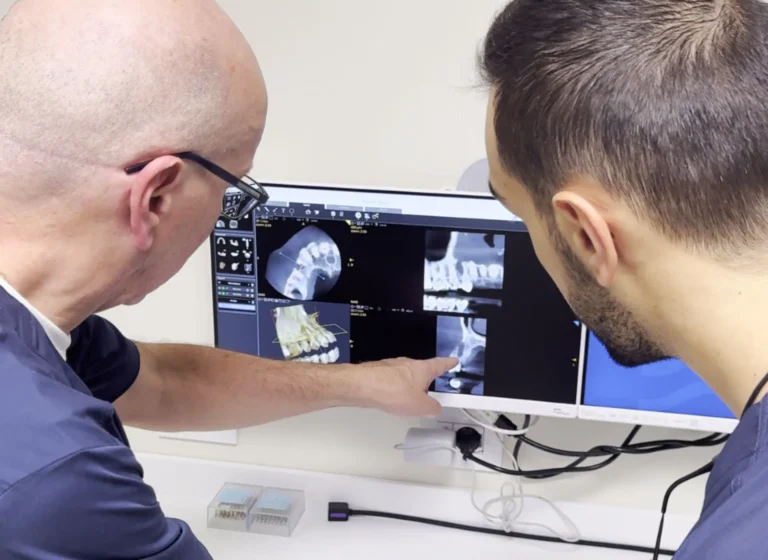
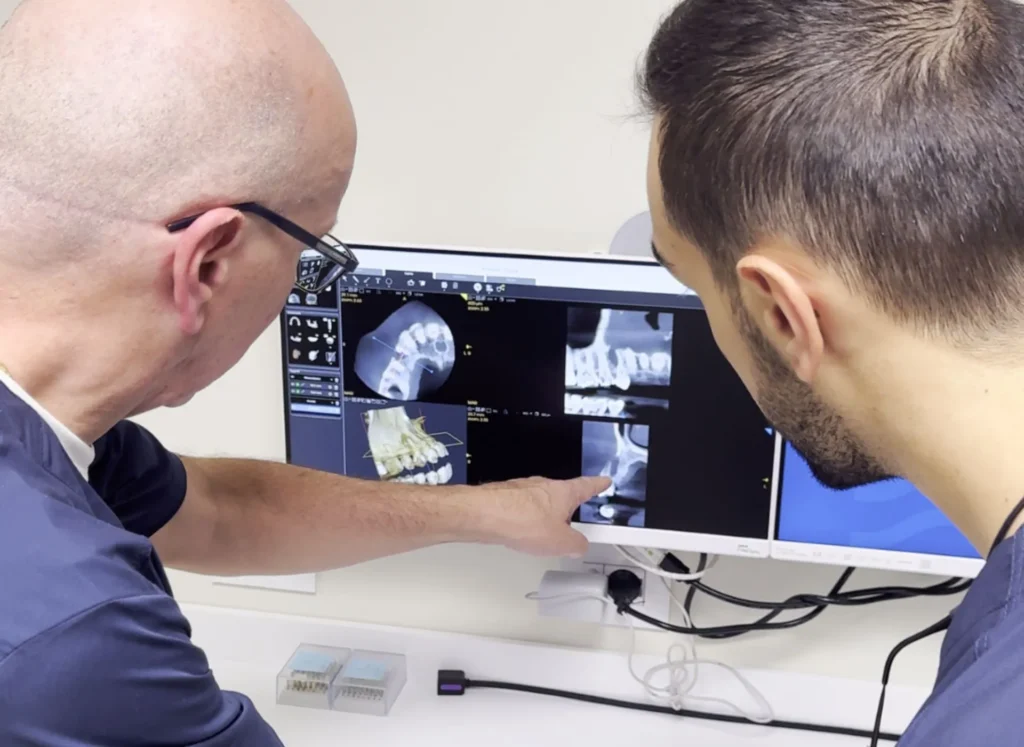
Three-dimensional imaging can help the clinician understand the available bone and the relationship of the proposed implant position to surrounding anatomical structures. Kings Medical Center has 3D cone-beam imaging in the practice and lists bone regeneration and maxillary sinus lift among its implantology services.
However, additional surgery should never be assumed to be necessary simply because a tooth is missing.
Some patients have sufficient bone for straightforward placement. Others may require a different approach, and in certain cases a bridge may represent a more suitable alternative once all factors have been considered.
Trying to determine your bone volume yourself from an old X-ray or an image found online is not useful. The relevant anatomy needs to be assessed specifically for your mouth.
The comparison between bridge and implant may therefore change considerably after clinical examination and imaging.
Is a bridge quicker than a dental implant?
In many conventional situations, a dental bridge can involve fewer biological healing stages because it does not require an implant to be surgically placed and integrated with the surrounding bone.
Implant treatment includes a surgical component. Depending on the case, the implant may be restored according to immediate, early or conventional loading protocols, and the appropriate timing depends on factors including stability, site conditions and the overall treatment plan. Published implant literature recognises several different loading approaches rather than one schedule suitable for every patient.
This means that an implant should not automatically be described as either a fast or slow treatment.
Some patients may be suitable for relatively streamlined implant protocols. Others may require extraction healing, bone regeneration or another preparatory procedure, extending the overall treatment pathway.
A bridge avoids the osseointegration phase because no implant is placed into the bone. However, the supporting teeth still need to be examined, prepared when required, recorded accurately and restored appropriately.
Treatment speed should therefore be considered after clinical suitability, not before it.
Selecting a bridge solely because it appears quicker could mean unnecessarily involving healthy adjacent teeth.
Conversely, insisting on an implant simply to avoid a bridge may not make sense when the neighbouring teeth already require substantial restorative treatment or when implant surgery would be disproportionately complex.
At Kings Medical Center, the availability of implantology and prosthetic dentistry allows these options to be evaluated within the same treatment-planning process.
Patients should also avoid any DIY solution intended to fill a missing-tooth space. Home-made replacement teeth, online kits or adhesives cannot reproduce a clinically planned bridge or implant restoration and may interfere with the gums, bite or remaining teeth.
Can a bridge or implant replace more than one missing tooth?
Yes. Although patients frequently compare a single bridge with a single implant, both restorative concepts can also be used when more than one tooth is missing.
A tooth-supported bridge may replace one or more missing teeth by connecting the replacement units to suitable natural abutment teeth. How many teeth can appropriately be replaced depends on factors including the location of the gap, condition of the supporting teeth and forces generated during function.
Implants can also support restorations replacing several teeth. It is not always necessary to place one implant for every missing tooth. Depending on the clinical situation, multiple implants may support a fixed dental prosthesis spanning several missing teeth.
Long-term systematic reviews have found favourable survival for implant-supported fixed dental prostheses, although both biological and technical complications remain possible and require monitoring.
The situation becomes even more individual when several adjacent teeth are absent because the dentist must consider not only the number of missing teeth but also:
- where the gap is located;
- how much bone is available;
- the condition of remaining teeth;
- the patient’s bite;
- aesthetic requirements;
- gum and bone health;
- how the final restoration can be cleaned;
- the distribution of chewing forces.
Research comparing tooth-supported and implant-supported fixed prostheses confirms that both approaches can provide reliable results, which reinforces the importance of case selection rather than assuming one solution is universally superior.
Kings Medical Center provides implantology together with fixed and removable prosthetic treatment, enabling different methods of replacing one or multiple teeth to be considered according to the patient’s needs.
How does a dentist decide between a dental bridge and an implant?
Choosing between a bridge and an implant requires looking at the whole mouth rather than just the empty space.
The dentist first needs to understand why the tooth was lost. Gum disease, fracture, decay, infection and trauma can create different conditions in the surrounding tissues and may influence future treatment.
The adjacent teeth then need to be evaluated.
If they are healthy and minimally restored, preserving them may favour discussion of an implant. If they already require crowns or significant restorative treatment, a bridge may become more reasonable. The literature comparing single-tooth replacement specifically identifies the condition of adjacent teeth as an important factor in treatment selection.
For an implant, additional considerations include bone availability, gum health, relevant anatomical structures and medical suitability for surgery. Treatment-planning reviews emphasise that implant decisions should incorporate bone conditions, systemic factors, aesthetic requirements, possible complications and patient preferences rather than relying on survival statistics alone.
The assessment may therefore include:
- examination of the missing-tooth area;
- evaluation of the neighbouring teeth;
- gum and periodontal assessment;
- examination of the bite;
- appropriate radiographs;
- 3D imaging when clinically indicated for implant planning;
- discussion of medical history;
- consideration of hygiene and maintenance;
- discussion of the patient’s priorities.
At Kings Medical Center, implantology is approached within a multidisciplinary dental environment, and the practice has access to CBCT imaging, digital scanning and restorative treatment options.
The final recommendation should explain not just which option can be performed, but why it makes sense for that particular patient.
Conclusion: which is better: a dental bridge or an implant?
So, which is better: a dental bridge or an implant? Neither treatment is universally better. The correct choice depends on the condition of your teeth, gums and bone, the position of the missing tooth, your general health and the type of restoration that provides the most appropriate balance between function, preservation and maintainability.
When the teeth next to a gap are completely healthy, an implant can have the important advantage of replacing the missing tooth independently without routinely requiring those adjacent teeth to be prepared as bridge supports. This preservation of healthy neighbouring tooth structure is well recognised in the literature on single-tooth replacement.
A bridge, however, can be an appropriate solution when adjacent teeth are suitable abutments, particularly when they already require restorative treatment or when implant surgery is not the preferred clinical option.
In terms of longevity, both approaches can perform well. Research comparing tooth-supported and implant-supported fixed prostheses has found favourable and broadly comparable survival outcomes in selected cases. Implants themselves also demonstrate high long-term survival, although biological and technical complications can occur and the prosthetic restoration may require maintenance over time.
For this reason, do not choose a replacement tooth simply because one treatment is described online as more modern, quicker or longer lasting.
You should also avoid temporary DIY tooth-replacement methods or products purchased online. Replacing a missing tooth requires consideration of the bite, remaining teeth, gum health and supporting bone, and an unsuitable restoration can create additional problems rather than solving the original one.
If you have lost a tooth and are deciding between a bridge and an implant, contact Kings Medical Center to arrange an individual dental assessment. The team can evaluate the neighbouring teeth, available bone and overall oral health and explain which treatment options may be appropriate for your particular situation.
Kings Medical Center in Dubai Deira
Address: Al Rigga Business Center
Visit our Dental Area or Skin Area.